Streaming kind of broke the idea of owning music.
You pay $11 a month, you get every song ever recorded, you own none of it. If Spotify pulls a track, the track is gone for you. If a label moves catalog to a competitor, you follow.
Music NFTs aim at a different deal. Actual ownership, on a blockchain, that survives whatever a platform decides next year.
Quick distinction first. Most "music NFTs" you've heard about were a song minted as a token. One song, one NFT, sold to one collector. Simple. Composable music NFTs aren't that.
Composable music NFTs combine
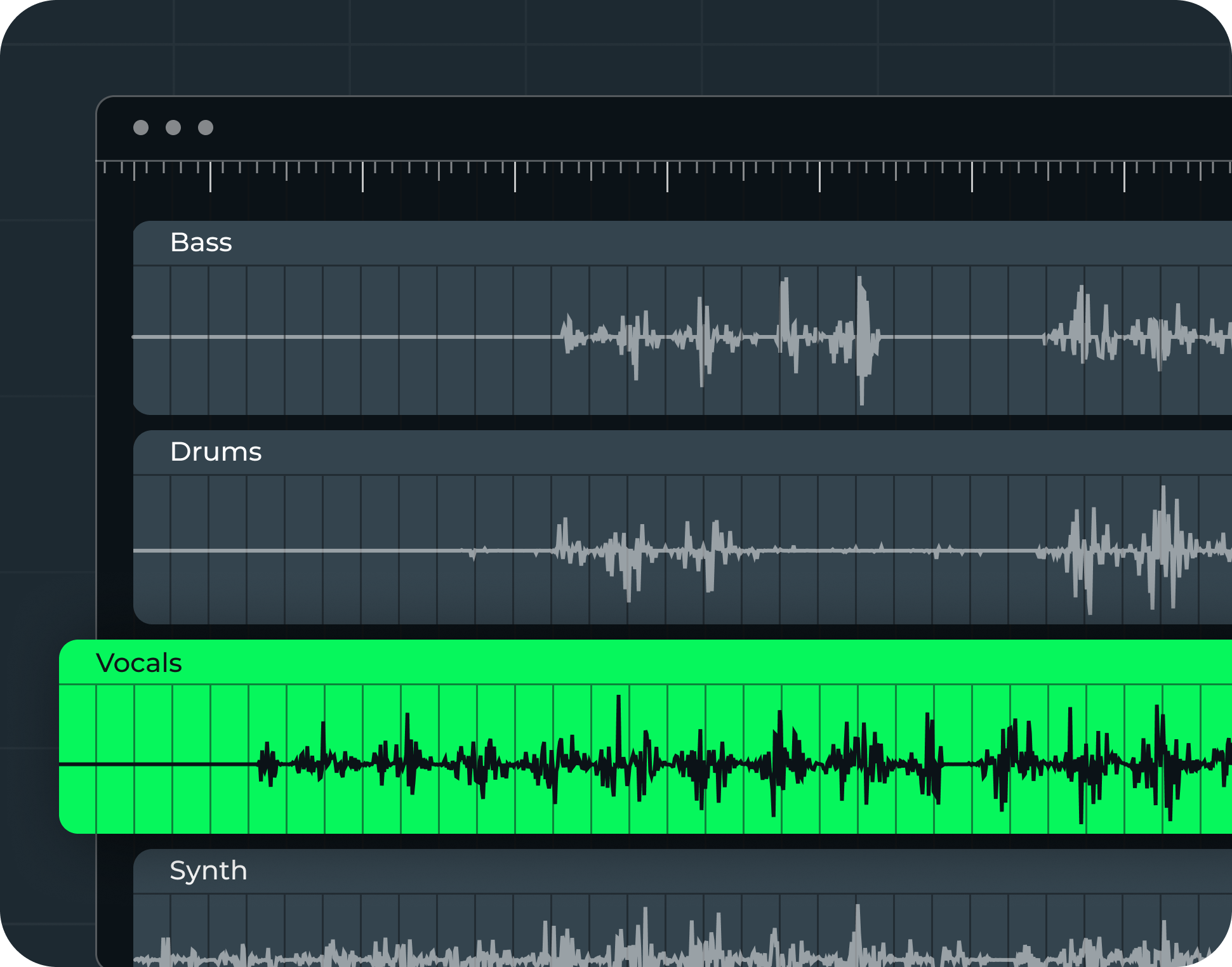
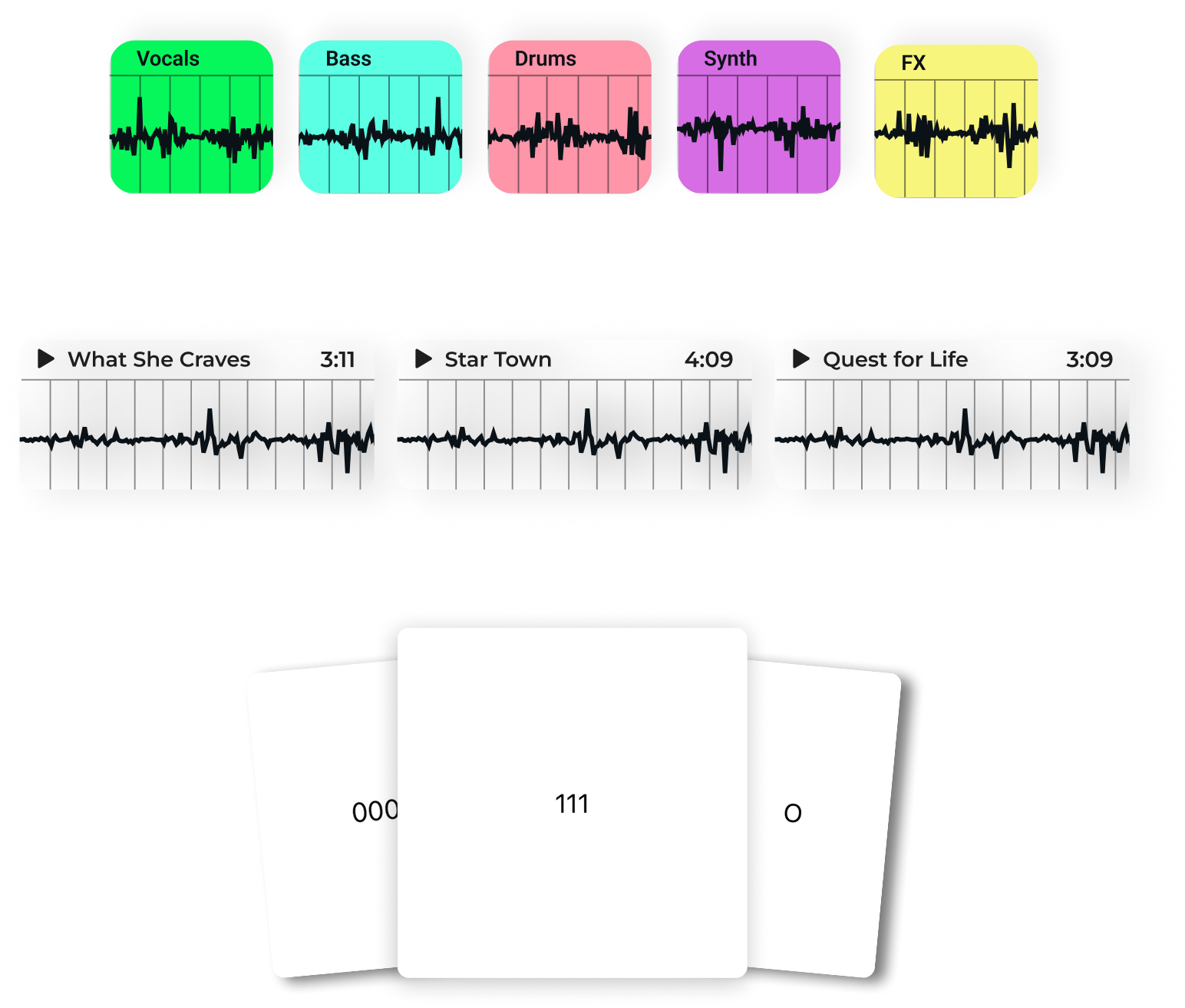
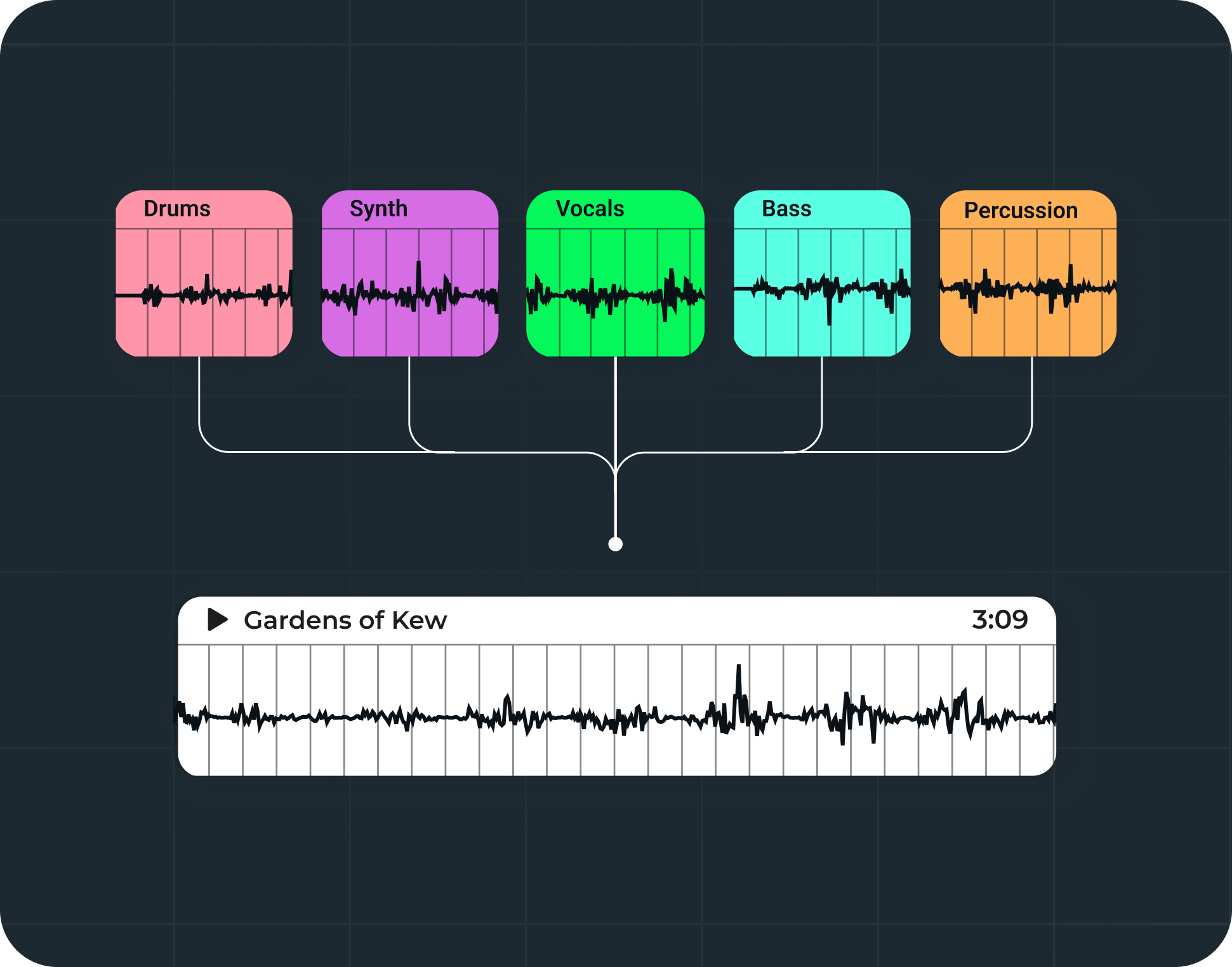
Take a song. Split it into drums, bass, vocals, synths, percussion, FX — every layer. Mint each layer as its own NFT.
Now you can:
- Own just the drums
- Own just the vocal
- Trade pieces around
- Or, if you collect every piece, combine them into a Song token
The combining part is the trick. It's an actual on-chain call. The original stems burn. A new token mints in their place. There's no undo.
Same trick applies one level up. Collect every Song from an album, forge them, the songs burn, an Album token mints. Each level up shrinks the lower-level supply.
This is what stems.fm is doing with Kyler Simzer's catalog. Three token tiers — stems, songs, albums — all in one ERC-1155 contract on Ethereum mainnet. The shrinking supply isn't a marketing trick. It's a contract function. Burn is permanent.
ERC-1155 actually matters here
If you've collected NFTs before, you've mostly seen ERC-721. Punks, BAYC, Pudgies, etc. One token per contract instance, each unique.
ERC-1155 is built for projects with many related token types. Stems, songs, and albums sit in the same contract. Forging works across them natively. ERC-721 would've meant separate contracts per tier and the whole thing would feel held together with tape.
If you care about the tech, the stems.fm contract is 0xb8673dd1FAc82c149Be8a68E09E1a9a5e87C8D1a on mainnet. Etherscan it.
What changes for listeners
Streaming gives you access. NFTs give you a thing.
That sounds small. It isn't. Think about what you can do with the thing:
- Hold it. It doesn't disappear if the platform goes down.
- Sell it.
- Trade it.
- If you held a stem from a song that becomes a hit, you actually held part of that hit. On-chain. Provable.
Flip side: friction. Streaming is two taps. Music NFTs need a wallet, gas, some baseline knowledge of what you're clicking. That's the cost.
What changes for artists
Bigger shift over here.
Streaming pays around $0.003 per play. You need millions of streams to make a living. That's been the math for a decade and it's not changing.
Music NFTs let an artist sell directly. No platform skim. No label cut. Composable music NFTs go a step further — the artist isn't only selling a finished track. They're selling parts. Every stem is its own little market. Every Song token someone forges signals real conviction, not a passive listen.
Kyler put it cleanly in his whitepaper:
“Streaming measures attention. Stems measures market conviction.”
That's the actual pitch.
About future revenue rewards
Worth being precise here because some music NFT projects oversell this part.
Stems.fm's whitepaper says revenue rewards are forward-looking. Future versions of the platform may tie certain song or album tokens to streaming or sync income. May, not will. Eligibility could depend on holding, staking, holding for a period. None of it is automatic, none promised.
So if you're collecting on stems.fm right now, the value is in the music, the scarcity, and the market that forms around it. Anything beyond that comes later, if at all.
Common questions
Do I need to be in crypto? A wallet, some ETH. That's it.
Are these music royalties? No. Most music NFTs aren't royalty NFTs. Different category, different rights.
Why not just Spotify? Because Spotify rents you the music. NFTs sell it. Different relationship.