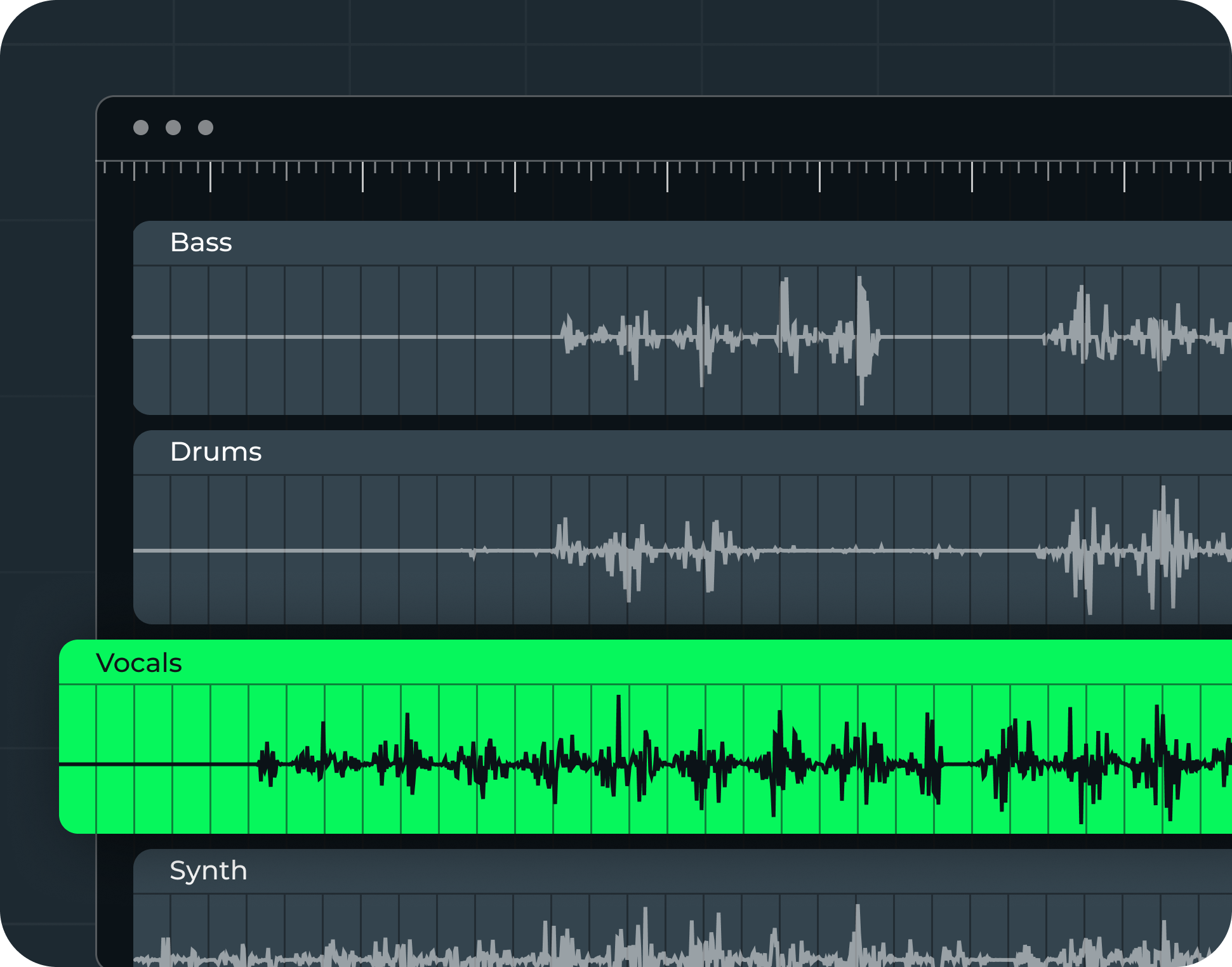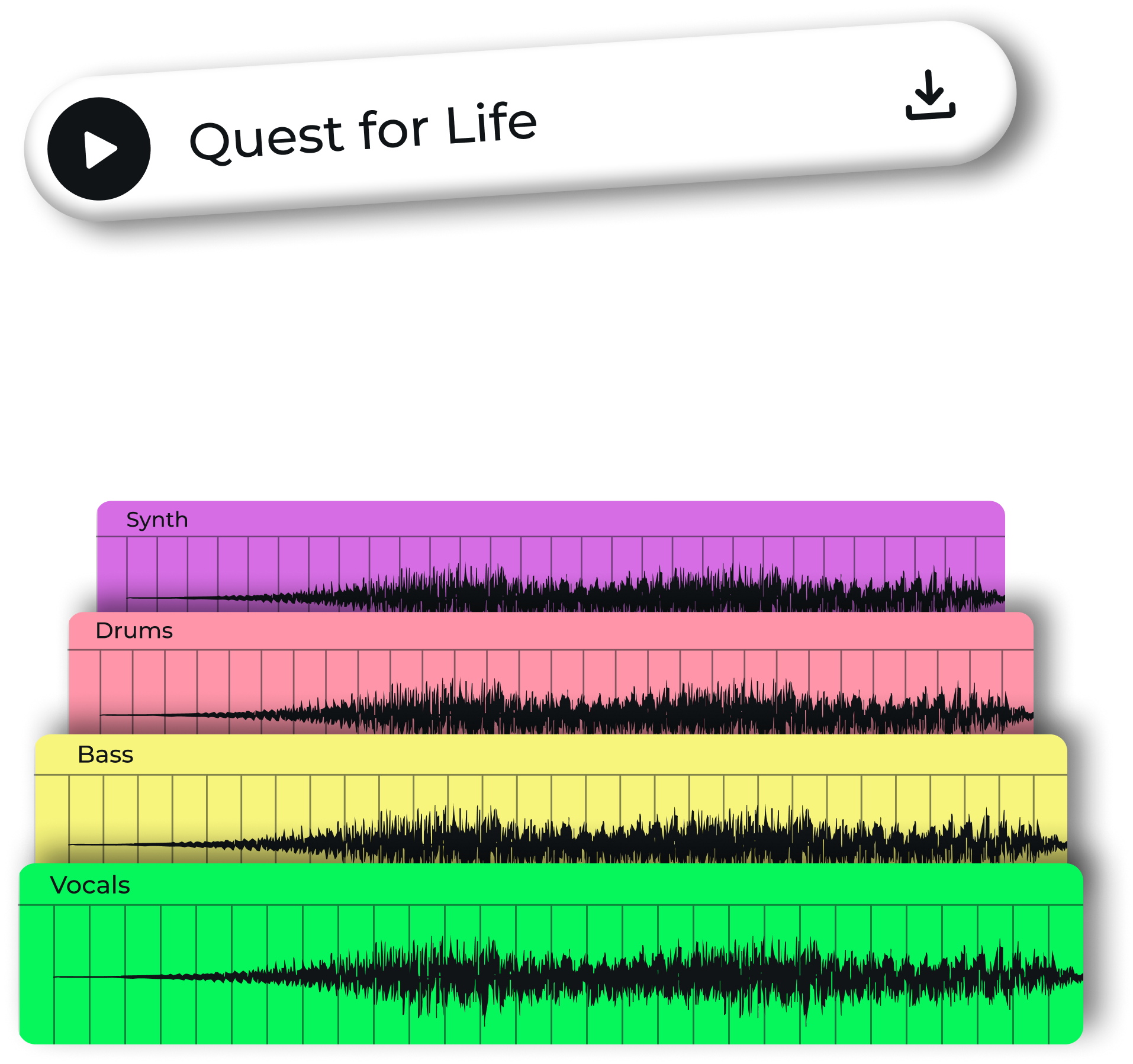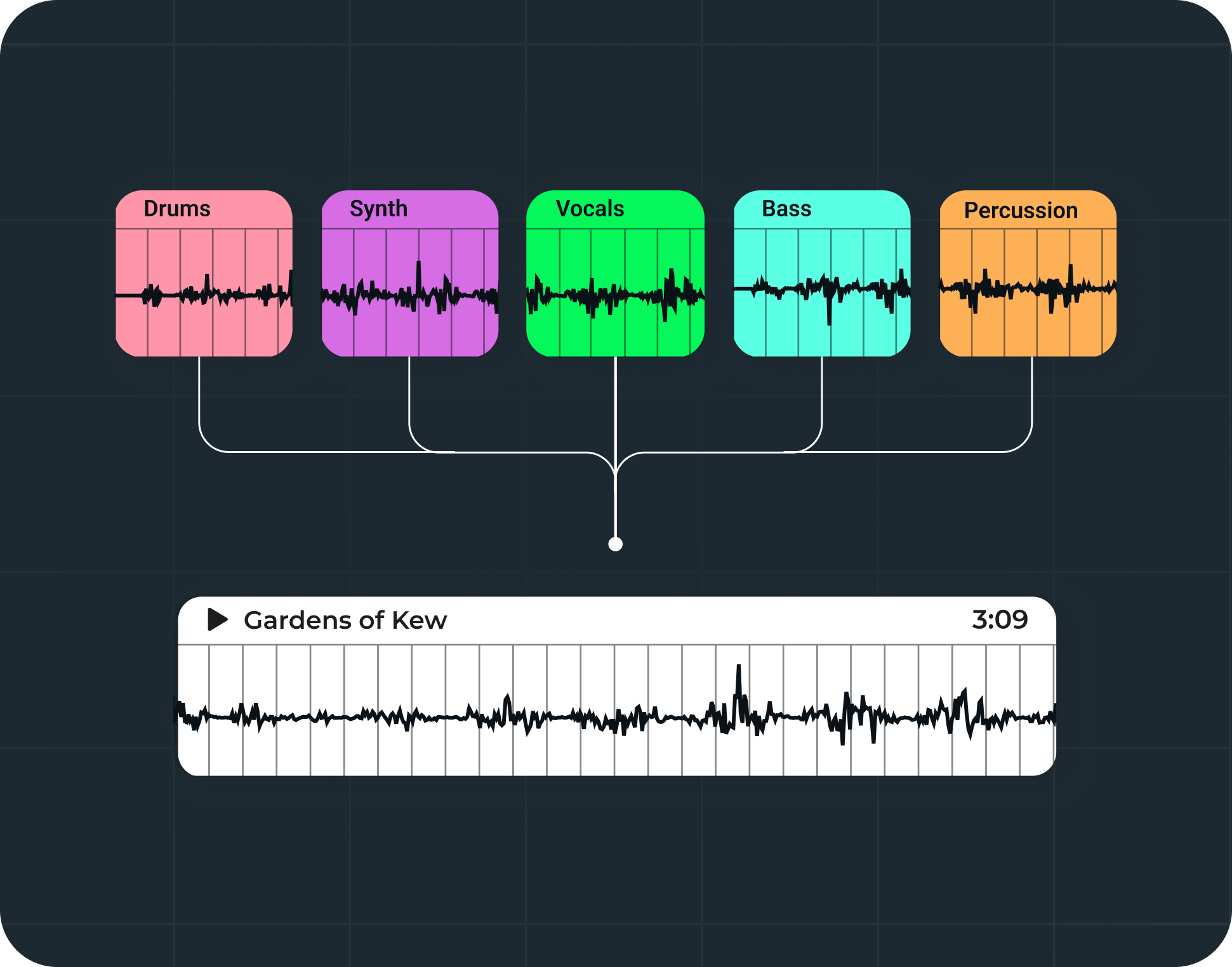
Forge a Song token on stems.fm. It shows up in your wallet with an ISRC trait attached.
That code is not random. It's a registered identifier in the same system that tracks every commercial recording on Spotify, Apple Music, radio, TV, and anywhere royalties get paid.
Most NFT projects don't bother. Stems does. Worth understanding why.
What an ISRC actually is
International Standard Recording Code. 12 characters. Looks like USABC2300001.
The first two characters are the country code. Next three are the registrant. Next two are the year. Last five are the recording's serial number for that registrant in that year.
Every recording that goes through a label, distributor, or streaming service gets one. It's how royalties get tracked across the whole music industry.
What stems.fm does with it
When you forge a Song token, the contract attaches the ISRC for that specific recording as a token trait. The trait sits in the metadata, viewable on OpenSea, readable on Etherscan.
Same code that Kyler's distributor put on the Spotify upload. The publisher uses it in their books. Streaming platforms use it to credit plays.
The Song token isn't just a JPEG with an audio file. It's also a pointer to a recording that the music industry already knows about.
Why that matters
Three different angles, depending who you are.
If you're a collector: the ISRC is verification. The Song token on the chain links to the same recording that's selling on every streaming service. Not a knockoff. Not a re-recording. The actual track.
For an artist watching this space: the ISRC is the bridge between web3 ownership and the existing music industry. Any future revenue mechanism (sync deals, label-style royalties, performance income) is going to ride on this same code.
And if you're a music industry person looking at NFTs sideways: this is the first time an NFT project has bothered to file in your filing cabinet too.
How to find the ISRC on your token
OpenSea route: pull up your Song token's page. Scroll to traits. Look for ISRC. There it is.
Etherscan route: contract tab, Read functions, uri with your token ID, open the metadata JSON, find the ISRC field under attributes.
Stems.fm route: /collection, click the Song token, the trait shows in the detail pane.
All three agree. Should agree, anyway. If they don't, trust Etherscan.
What it does not do
Having an ISRC doesn't automatically pay royalties to Song token holders. The whitepaper is explicit that revenue mechanics are forward-looking. The ISRC is the address royalties would be sent to, not a promise that they're being sent.
Holding the Song token doesn't give you the master rights or the copyright. The ISRC identifies the recording. The token identifies you as the holder of one onchain instance of it. Two different things.
Streaming royalties for the recording still go to whoever holds those rights at the label or distribution level. That's the existing music industry's plumbing, untouched by anything onchain.
Why most NFT projects skip this
Filing an ISRC requires being an actual registrant with a recording rights organization in the artist's country. SoundExchange, PPL, the equivalent body wherever. Small NFT projects don't have that relationship.
Kyler does. The catalog has been in the distribution system since before stems.fm existed. Each recording already had its ISRC. The chain version just inherited the same code.
That's the unsexy reason this works. Existing music industry plumbing plus a contract that knows what to attach. No new identifier scheme.
Verifying your Song token against the recording
Take the ISRC from your token. Search it on Spotify by pasting into the search bar. The recording comes up.
Same code in both places. You now have proof that the Song token in your wallet points at the same recording you can listen to on any streaming service.
This is the kind of cross-check that didn't really exist on the 2021 wave of music NFTs.
Bookmarks worth keeping
- OpenSea trait viewer on your Song token's page
- Etherscan stems.fm contract (0xb8673dd1FAc82c149Be8a68E09E1a9a5e87C8D1a) for the uri lookup
- Spotify search bar for the ISRC verification
- Whitepaper: "Stems: A New Layer for Valuing Music" by Kyler Simzer for the framing
Pull up your last Song token on OpenSea. Find the ISRC. Paste it into Spotify. That's the whole circle.