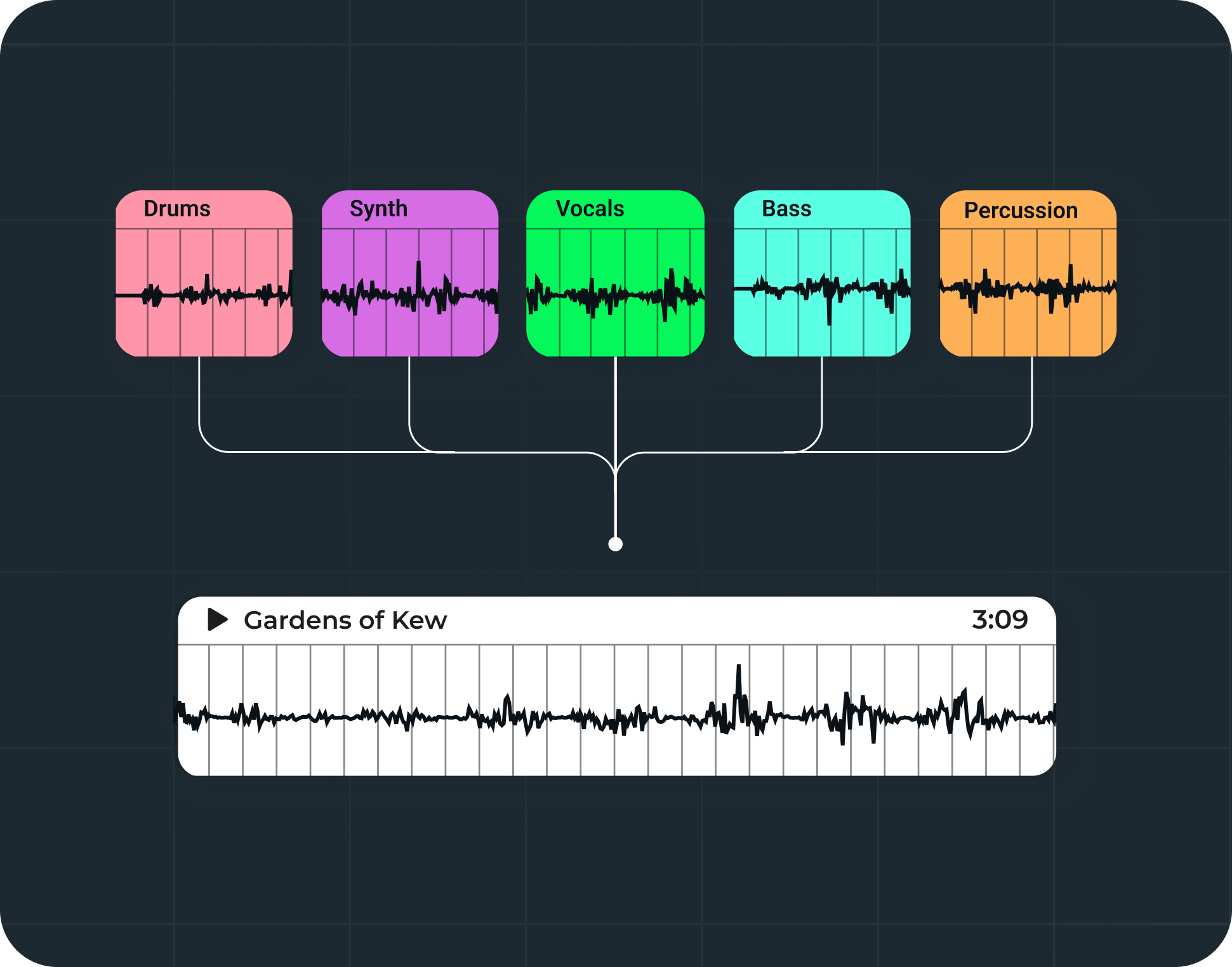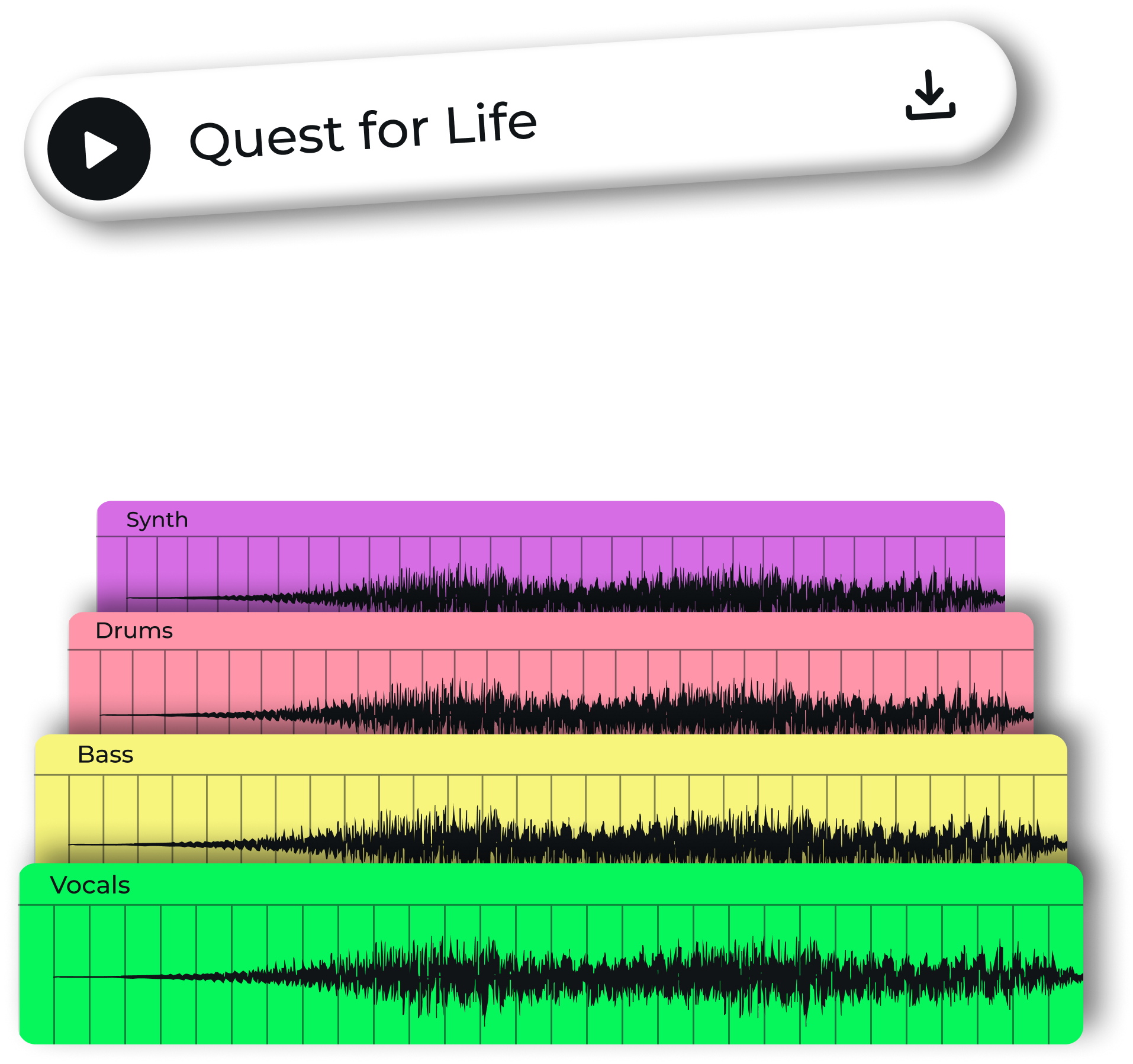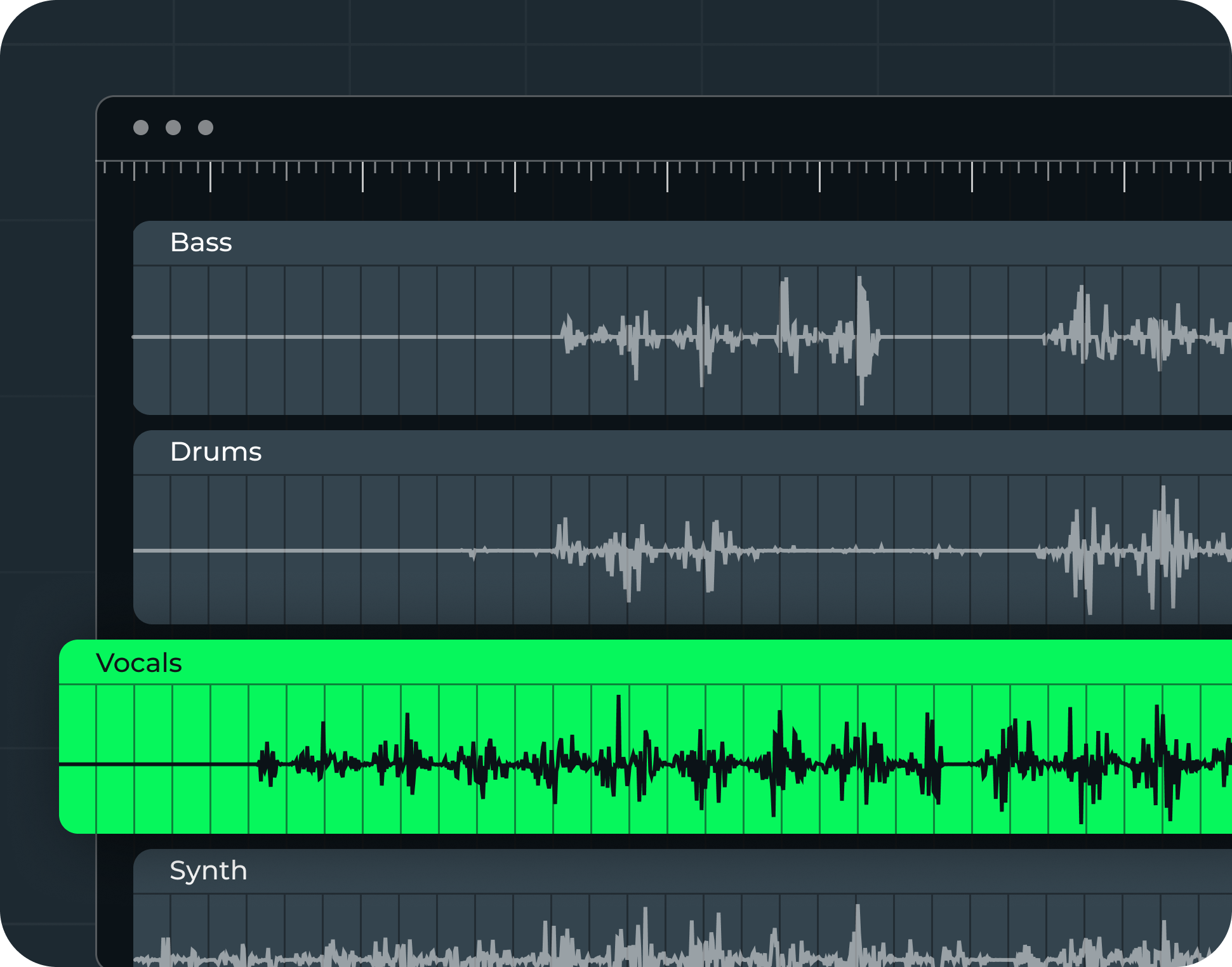
Not all stems mint in the same numbers.
Drums are everywhere. Woodwinds are rare. Strings somewhere in between. That difference isn't random. It's a design choice in the contract that shapes the entire collecting game.
Here's the full type list and what each one means for you as a collector.
The 11 stem types stems.fm uses
Every stems.fm release ships with stems in some combination of these types. Not every song uses all 11. Most use 5 to 8.
- Drums: percussion of any kind, the rhythmic floor of the song
- Bass: bassline, whether DI or amp, the low-end anchor
- Vocals: lead vocal, the part the listener follows
- Synth: synthesizer parts, lead or pad
- FX: effects, transitions, atmospheric layers
- Percussion: non-drum-kit percussion (shaker, congas, hand drums)
- Guitar: electric or acoustic, rhythm or lead
- Keyboard: piano, Rhodes, organ, any keyboard instrument
- Strings: violin, viola, cello, real or sampled
- Brass: trumpet, trombone, saxophone family
- Woodwinds: flute, clarinet, oboe, the rarer instruments
Why supply varies by type
Two reasons, both honest.
First, songs actually need different amounts of each. A pop song might have one drum stem, one bass stem, four backing vocal stems, two synth stems. The mint count reflects how the song was made. You can't have 10 lead vocal stems if there's only one lead vocal.
Second, the platform leans into structural rarity by tier. Common instruments get higher mint counts because more collectors want a piece. Rare instruments get lower counts because the songs use fewer of them. The rarity follows the music, not the other way around.
The common tier: drums, bass, FX
If you're starting out, this is where you spend least. Mint counts are highest. Secondary floors stay low.
Doesn't mean low value. Drums are also the most necessary stem in any song burn. You can complete almost any song with drum stems. Easy to source, easy to find, the working currency of the catalog.
The middle tier: vocals, synth, guitar, keyboard
Mid-range mint counts. These show up on most songs but in smaller quantities.
Vocals are interesting because they often have the most personality of any stem. A song might have one lead vocal and three backing vocals. The lead is often the rarest single stem in the song. Worth checking before you assume drums are the chase.
The rare tier: strings, brass, woodwinds
Lower mint counts across the board. Not every song has these. The ones that do often have just one or two.
These are the stems that catch chase premiums. A woodwind stem from a song with only 20 woodwind stems in existence trades very differently than a drum stem from the same song.
If you're trying to spot value early, watch what's happening with rare-tier stems on new drops. They reveal first, spike fast, then drop last when interest fades.
Checking supply for a specific song
Before you commit to completing a song, count the stems by type. Each stem on /mint or OpenSea shows the trait. The type count tells you what the contract created for that song.
Etherscan totalSupply on each stem token ID tells you the current circulating count after burns. Subtract from the mint count to see how many have been forged away.
A song where 40% of stems have already been burned is much closer to retirement than one at 5%. Mint counts and burn counts read together.
What stem type tells you about a song
A song with many strings and brass stems is probably orchestral, cinematic, or jazz-leaning. A song with many synth and FX stems is probably electronic. A song that's heavy on guitar and drums is probably band-style.
You can tell the genre before you hear it. Just by reading the type list.
Some collectors use this to filter songs they actually want to listen to before they buy anything. The audio is part of the asset, after all.
The mistake people make with rare types
Buying woodwind stems just because they're rare, without checking whether the song is interesting.
Rare doesn't mean valuable. A woodwind stem from a song nobody is trying to complete is not going to appreciate. The chase premium only exists when there are collectors actively trying to forge that specific song.
Rarity is necessary but not sufficient. The demand has to be there too.
Quick reference
- Common (large mint): drums, bass, FX
- Middle (medium mint): vocals, synth, guitar, keyboard, percussion
- Rare (small mint): strings, brass, woodwinds
- Always check per-song stem counts before assuming type tier matches actual scarcity
Read the type list on a song before you spend on stems. The list tells you more about what completing the song is going to cost than the floor does.