Rarity gets thrown around a lot in NFT land. Most of the time it's a rarity score on a third-party site that nobody verified.
On stems.fm, rarity is structural. It's baked into the contract. Three things drive it: stem type, reveal state, and how many people forged.
Quick breakdown of each.
1. Stem type tiers
Not all stem types ship in the same quantity. Drums, bass, and FX tend to circulate in higher numbers. Strings, brass, woodwinds, lead vocals — produced in much lower supply by design.
This isn't a Pudgy Penguins trait roll. The supply per type is set by Kyler when the song's stems are minted. If a track only has 50 string stems and 500 drum stems, the strings are mathematically rarer. Etherscan it.
Practical effect: floor prices on OpenSea sort roughly by tier. Drums cheap, strings expensive. The market figures this out within days of a release.
2. Unrevealed stems
Here's where it gets interesting. When a stem is first minted, it's unrevealed. You don't know which stem type you got. Could be drums. Could be a chase strings. It's sealed.
This is intentional. From Kyler's whitepaper: unrevealed stems are the early market period when rarity is unknown. It's the part of the cycle where you're betting on what's inside.
An unrevealed stem sells for an average of what people think the underlying distribution is worth. A revealed-as-strings stem sells for what strings actually go for. Same NFT, different price the moment it's opened.
3. The reveal moment
Revealing is one transaction at stems.fm/collection. You click Reveal. The contract assigns the actual stem type using onchain randomness. From that block onward, anyone can see what it is.
Reveal is one-way. You can't unreveal. Once it's a drum, it's a drum forever.
Some collectors hold unrevealed on purpose, betting the market for unrevealed will outpace the average revealed price. That's the actual game.
4. Forging rewires the supply
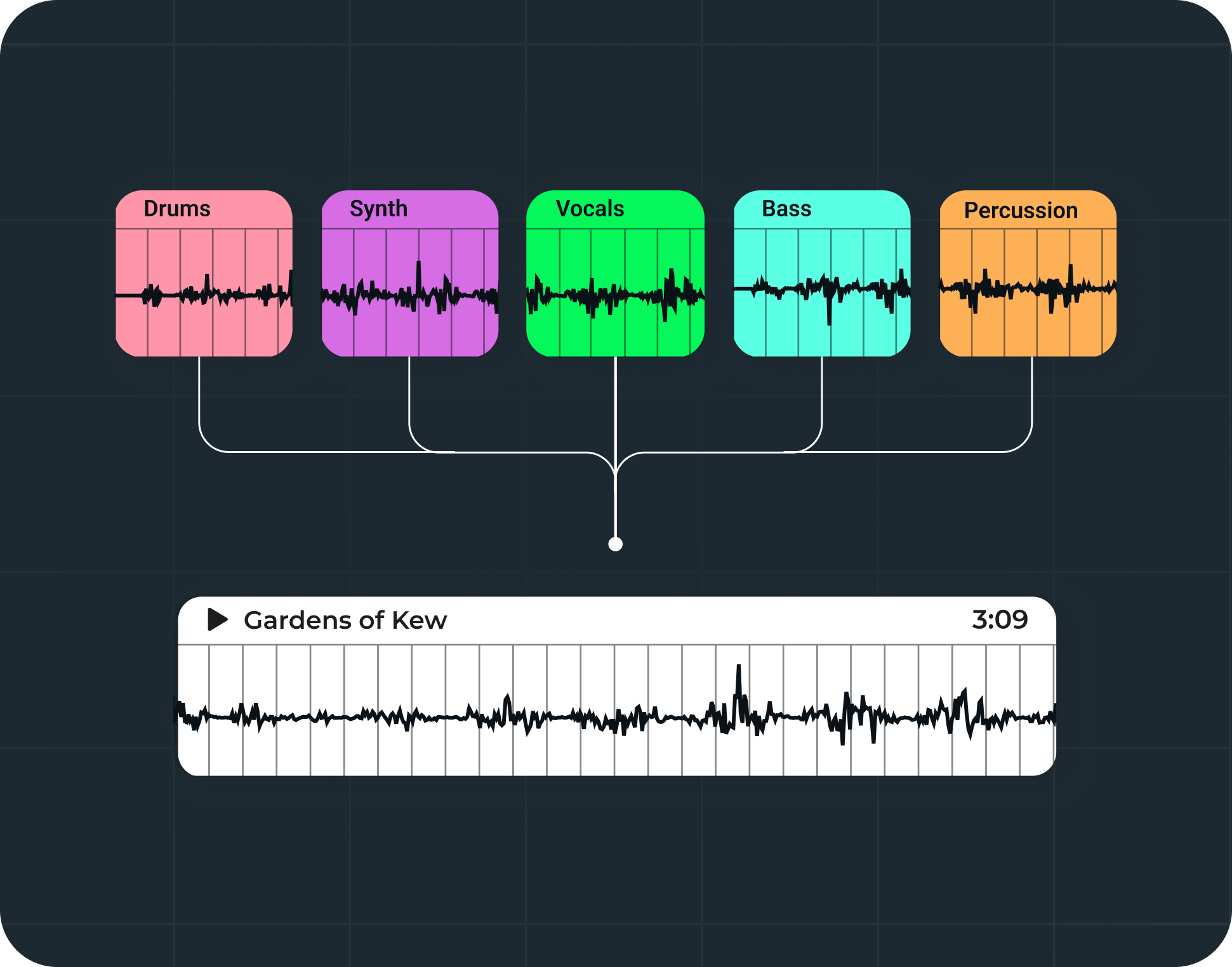
Every time someone forges a song, every required stem is burned. Permanently removed from supply.
So a stem type that started with 500 supply might be at 380 a month later, because 120 went into completed songs. The drums you hold get rarer just because other people forged.
Same logic at the album level. Songs burn into albums. A Song token that started with supply of 200 might be at 60 if collectors are completing the album. By construction, late buyers face less supply than early ones.
Reading rarity on OpenSea and Etherscan
- OpenSea collection page shows traits — stem type, song, reveal state. Filter by type to compare floors within a tier.
- Etherscan on the contract address shows total supply per token ID. This is the only authoritative count — third-party rarity sites can lag.
- stems.fm/stats shows live forge activity. Spikes in forging mean stem supply just dropped.
Quick FAQ
Are rare stems always more valuable? Usually, but not always. A common drum from a wildly popular song can outprice a rare string from a song nobody cares about. Demand still matters.
Should I reveal? Depends on your read of the market. If unrevealed prices are above the expected average, holding is rational. If they're below, reveal and sort.
Does forging make my stems rarer? Other people forging makes your stems rarer. You forging removes your own stems from supply.
The structural pitch
Streaming measures attention. Stems measures market conviction. Rarity is one of the levers that turns conviction into price.
Full mechanics in the whitepaper: Stems: A New Layer for Valuing Music. Linked in the footer under Documentation.