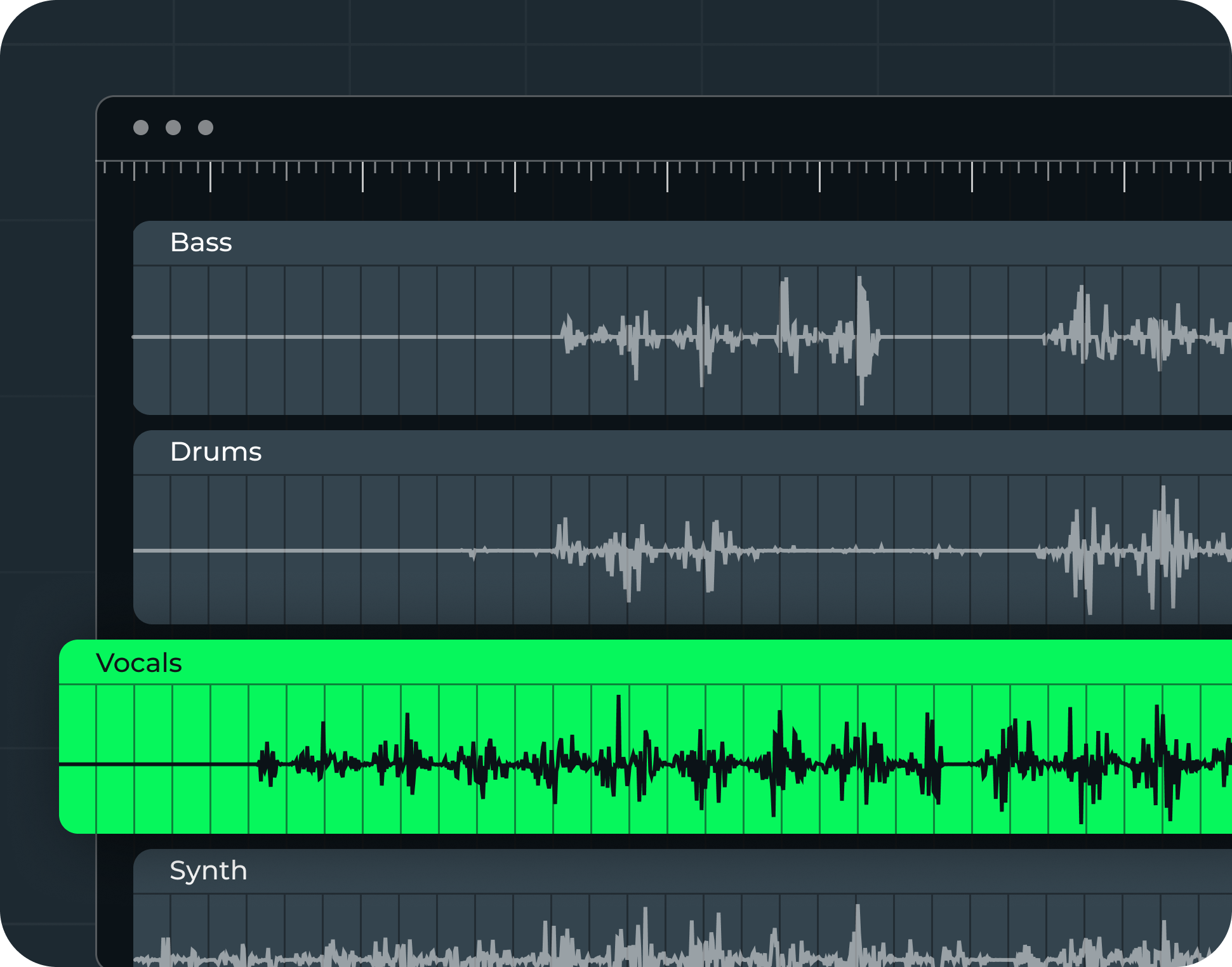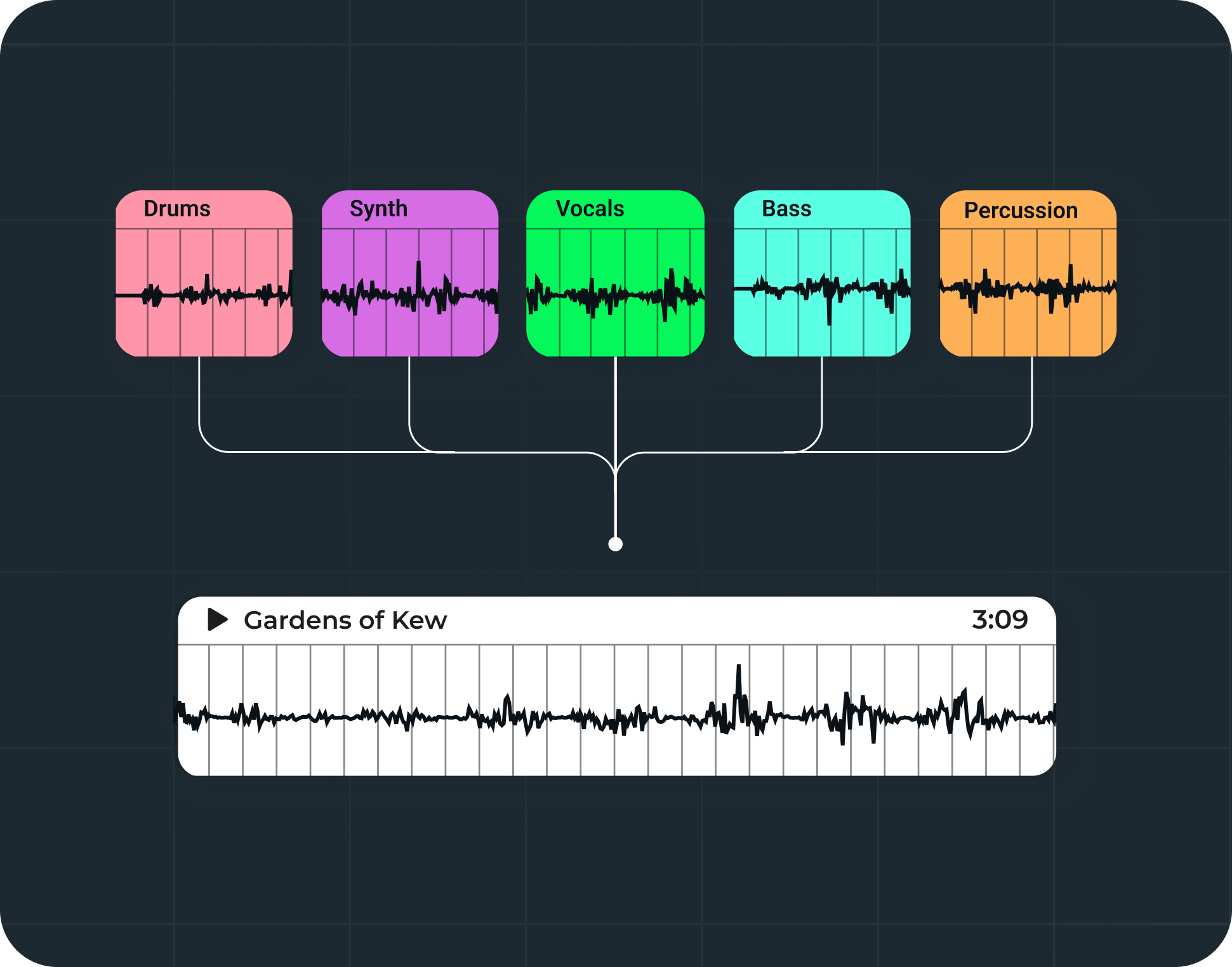
You have every stem. Now what.
Forging burns the stems and gives you a Song token. The Song token comes with the full audio, gets an ISRC trait, becomes the structurally rarer thing. Or you sell the stems separately and keep moving.
Both are real choices. Most collectors don't think about it as a choice, which is where the missed value sits.
What you're actually deciding
Forging is permanent. The burn happens onchain at the zero address. The stems are gone forever. No reverse, no refund.
That permanence is the whole point of the mechanic. It's also why the call deserves more than five minutes of thought.
When forging is the right call
- The Song token will be the lowest-supply asset of its kind in the catalog. If only six exist after a forge, that scarcity has real floor implications.
- You actually like the song. The Song token comes with high-quality audio you'll want to keep.
- You're building toward an Album burn. The album requires Song tokens, not stems. No Song, no Album.
- Floor for the stems individually has flatlined. If they're not appreciating separately, the forge consolidates value into the higher tier.
When holding the stems is the right call
- You're not sure you want to commit. There's no time pressure unless the song is about to be retired from forging.
- Stem floors are still moving up. Holding individual stems through an active market beats locking value into a single token early.
- You have a duplicate stem set. Forge one, list the other set across OpenSea, see which path made you more.
- The chase stem you spent big on hasn't been bought yet by anyone else. Holding it intact means you can still resell at the chase price.
The math, briefly
Add up what each stem floor sells for on OpenSea. That's your individual-sale ceiling, minus marketplace fees.
Then check the Song token floor for that same song. That's your forge outcome ceiling. Same OpenSea fee.
If forge floor is higher than the sum of stem floors, the market is paying a premium for the forged asset. Forge. If forge floor is lower than the sum of stem floors, the market values the parts more than the whole. Hold and sell separately.
This flips back and forth depending on which song is being chased. Check both numbers every time.
The trap people fall into
Forging on sentiment. They got every stem, they're excited, they hit the button.
Two days later they realize they could have gotten one stem 30% cheaper if they'd waited for a quiet Tuesday. Or that the song floor moved against them between the time they bought the last stem and the time they forged. Or that someone else completed the same song an hour earlier and the chase premium evaporated.
The contract doesn't care if you wait three days. Three weeks. Whatever. Let the market settle around your inventory before you act.
What to track before you forge
- Song token floor on OpenSea for the song you're considering
- Recent transfer history on the Song token. Active means the market is moving. Stale means it isn't.
- Stem floor for each input you'd be burning. Multiply by burn count to get your true forge cost basis.
- How many copies of this Song token already exist. Lower count means rarer outcome.
When the Album burn is your goal
The math changes. Album tokens need Song tokens. There's no way around the Song layer.
At that point forging stems into Songs is the only path, regardless of whether stem-floor or song-floor math favors it. You're spending forge cost as the price of admission to the album burn.
Just don't pretend it's a value-maximizing call. It's a goal-driven call.
One more thing
Forging is the part of stems.fm that makes the mechanic interesting. Most collectors who quit do so because they treated it as a one-shot decision. The ones who stick around treat it as a series of small calls, made cold, on weeks instead of minutes.
Whitepaper has the full argument. Footer, Documentation.